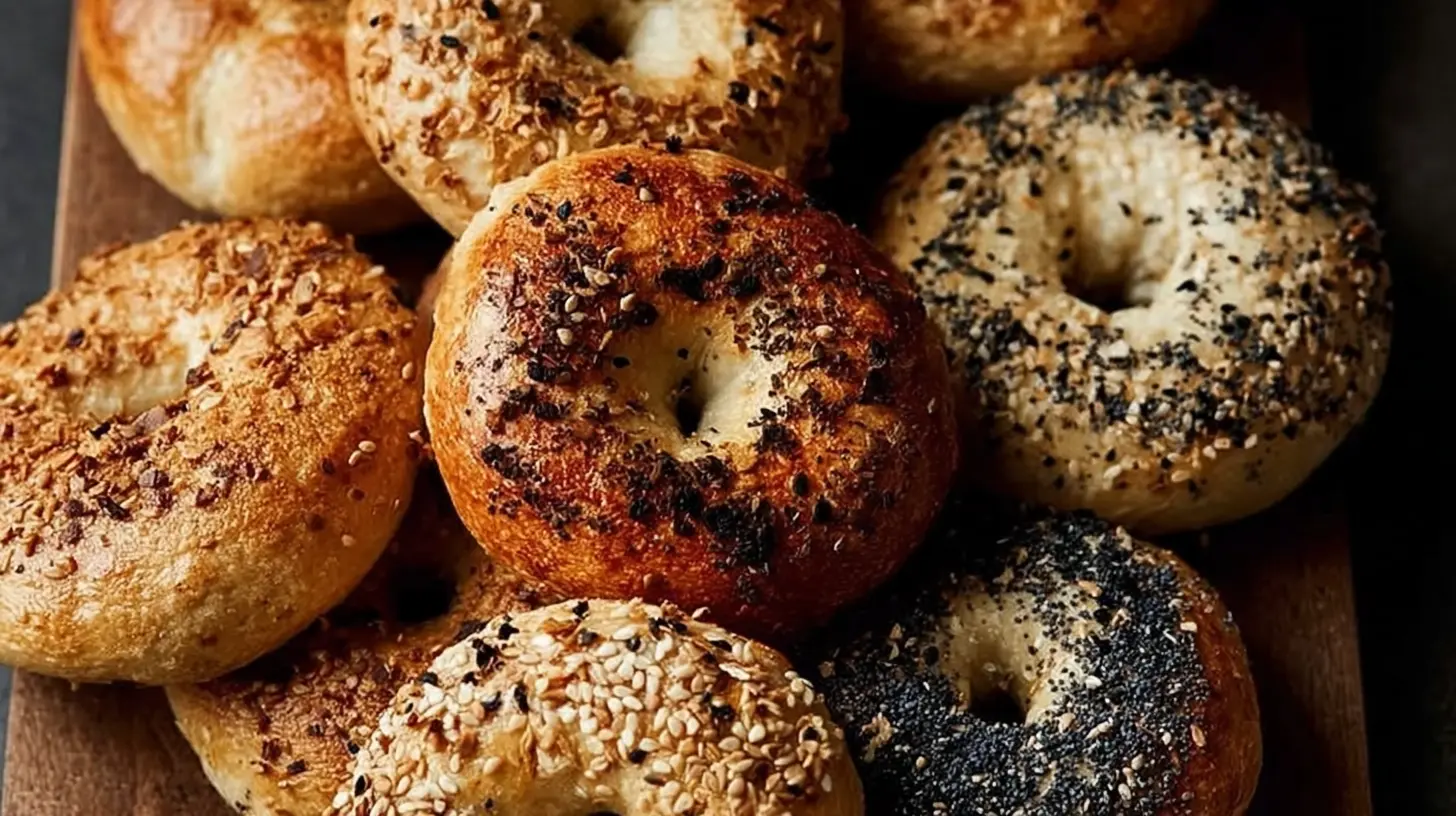
I remember the first time I bit into a truly fresh, warm bagel right out of the oven. The crispy, slightly blistered crust, the dense, chewy interior, and that distinct malty flavor – it was a revelation. It tasted nothing like the often-stale imposters I’d grabbed from coffee shops. That moment sparked a mission: to recreate that magic in my own kitchen. And let me tell you, while it sounds intimidating, making homemade bagels is incredibly rewarding, and surprisingly achievable. Forget those dense, bread-like rings; we’re talking about authentic, New York-style chew here.
Why You’ll Love This Dish
There’s something uniquely satisfying about pulling a tray of golden-brown, glistening bagels from your oven. It’s a project that engages all your senses, and the payoff is absolutely worth it. You’ll love making bagels at home not just for the incredible taste and texture that far surpasses anything store-bought, but also for the pure joy of creating something so iconic from scratch. It’s a fantastic weekend activity, a brilliant way to impress brunch guests, or simply a treat to elevate your everyday breakfast. Plus, you get to control every ingredient, ensuring a wholesome and delicious start to your day.
> “I used to think bagels were too complicated, but these recipes made it so approachable! My family can’t get enough of the everything bagels.” – A Happy Home Baker
The Cooking Process Explained
Making homemade bagels really boils down to a few key stages: mixing a simple dough, allowing it to bulk ferment, shaping the bagels, a crucial cold proof overnight, a quick boil in sweetened water, and finally, baking until golden. Each step contributes to that signature bagel chew and crust. The cold proof develops flavor, while the boil gelatinizes the starch on the exterior, giving it that characteristic shine and helping the crust brown beautifully.
What You’ll Need
Basic Bagel Recipe Ingredients:
- Warm Water: Around 105-115°F (40-46°C), just right for activating yeast.
- Active Dry Yeast: The powerhouse that makes our bagels light and airy.
- Granulated Sugar (or Barley Malt Syrup): Feeds the yeast and adds a subtle sweetness and that classic bagel flavor. Barley malt syrup is highly recommended for authenticity if you can find it!
- All-Purpose Flour (or Bread Flour): Bread flour gives a chewier texture due to higher protein content.
- Salt: Essential for flavor and controlling yeast activity.
For Boiling:
- Large Pot of Water: For the crucial boiling step.
- Baking Soda (optional): A tiny bit in the boiling water can deepen the crust color and enhance chew.
- Barley Malt Syrup or Honey: Adds color, flavor, and shine during boiling.
For Toppings (Optional):
- Egg Wash: One egg yolk whisked with a tablespoon of water for a shiny crust and to help toppings adhere.
- Sesame Seeds, Poppy Seeds, Everything Bagel Seasoning, Dried Garlic/Onion Flakes: Get creative!
Directions to Follow
Here’s a general guide for making delicious homemade bagels, adaptable to variations:
1. Activate the Yeast:
In a large mixing bowl, combine the warm water, yeast, and sugar/malt syrup. Stir gently and let it sit for about 5-10 minutes until foamy.
2. Mix the Dough:
Add the flour and salt to the yeast mixture. If using a stand mixer, attach the dough hook and mix on low speed for about 8-10 minutes until the dough is smooth, elastic, and pulls away from the sides of the bowl. If kneading by hand, turn the dough out onto a lightly floured surface and knead for 10-15 minutes. The dough should be firm but pliable.
3. Bulk Fermentation:
Place the dough in a lightly oiled bowl, turning it once to coat. Cover with plastic wrap and let rise in a warm spot for 60-90 minutes, or until nearly doubled in size.
4. Shape the Bagels:
Gently punch down the dough and divide it into 8-12 equal pieces (depending on desired bagel size). Roll each piece into a smooth ball.
- Method 1 (Poke & Stretch): Poke a hole in the center of each ball with your thumb and gently stretch the hole to about 1-1.5 inches in diameter, trying to maintain an even thickness.
- Method 2 (Rope & Join): Roll each piece into a 10-12 inch rope, then flatten one end and overlap it with the other end, pinching firmly to seal into a ring.
Place shaped bagels on a lightly floured baking sheet or parchment-lined sheet.
5. Cold Proof (Crucial!):
Cover the shaped bagels loosely with plastic wrap and refrigerate for at least 12 hours, and up to 24 hours. This slow, cold fermentation develops deep flavor and texture.
6. Boil the Bagels:
Preheat your oven to 425°F (220°C). Bring a large pot of water to a rolling boil. Add baking soda and malt syrup/honey to the boiling water if using.
Carefully drop bagels into the boiling water, 2-3 at a time, making sure not to overcrowd the pot. Boil for 30-60 seconds per side (for chewier bagels, boil longer, up to 2 minutes per side).
Using a slotted spoon, remove the bagels and drain well, placing them back on the parchment-lined baking sheet.
7. Bake:
If using toppings, brush the boiled bagels with an egg wash and sprinkle with your chosen toppings.
Bake for 18-25 minutes, or until deeply golden brown and cooked through, flipping halfway for even browning if necessary.
8. Cool and Enjoy:
Transfer the baked bagels to a wire rack to cool completely before slicing and serving. This is crucial for the internal crumb to set properly.
Best Ways to Enjoy It
Fresh homemade bagels are a treat in themselves! Slice them in half, toast lightly (or not!), and smear with cream cheese – plain, scallion, or lox-infused. Beyond that classic combination, consider these delicious ideas:
- Breakfast Sandwich Deluxe: Fill with scrambled eggs, bacon, cheddar, and a slice of avocado.
- Savory Suppers: Use them as the base for open-faced melts with tuna salad, cheese, and tomato, or even a mini pizza bagel.
- Sweet Sensations: A cinnamon-raisin bagel is fantastic with butter and a drizzle of honey, or cream cheese and sliced fruit.
- Dippers: Slice plain bagels into “sticks,” toast them, and serve with spinach and artichoke dip or hummus.
How to Store & Freeze
Homemade bagels are best enjoyed fresh, ideally on the day they’re baked. However, they can be stored:
- Countertop: Place cooled bagels in an airtight bag or container at room temperature for up to 2 days. To refresh, simply slice and toast.
- Refrigerator: Not recommended for whole bagels, as it can make them go stale faster.
- Freezer (Best Method): Once completely cooled, slice your bagels in half and place them in a freezer-safe bag. They will keep well for up to 2-3 months. When ready to eat, simply pop a frozen half directly into the toaster until warmed through and slightly crisp. No thawing needed!
Helpful Cooking Tips
- Use a Scale: Measuring flour by weight (grams) rather than volume (cups) is far more accurate and will give you consistent results.
- Don’t Skimp on Kneading: Well-kneaded dough develops the gluten necessary for that signature chewy texture.
- The Cold Proof is Non-Negotiable: Seriously, don’t skip or shorten the overnight cold proof. It’s where the flavor magic happens.
- Boil Vigorously: Ensure your water is at a rolling boil when you drop the bagels in. This creates that wonderfully crisp, chewy crust.
- Don’t Overcrowd the Pot: Like any boiled item, giving your bagels enough space in the boiling water ensures they cook evenly.
Creative Twists
Once you’ve mastered the basic recipe, the world of bagel variations is your oyster!
- Everything Bagels: Brush with egg wash and generously coat with store-bought everything bagel seasoning.
- Cinnamon Raisin: Add 1/2 cup of raisins and 2 teaspoons of ground cinnamon to the dough during the mixing stage.
- Asiago Cheese: Before baking, top with shredded Asiago cheese. For an extra cheesy experience, you can also fold in some shredded cheese into the dough.
- Jalapeño Cheddar: Fold in finely diced fresh or pickled jalapeños and shredded cheddar cheese into the dough. Top with more cheese before baking.
- Whole Wheat: Substitute up to 50% of the all-purpose flour with whole wheat flour for a heartier, nuttier bagel. You might need a tiny bit more water.
Common Questions
Why do my bagels turn out tough instead of chewy?
A: Tough bagels often indicate either too much flour in the dough (making it dry) or not enough kneading. Ensure your dough is firm but still pliable, and that you’ve given it sufficient kneading time to develop gluten. The boiling step also contributes to chewiness, so don’t skip it!
Can I make the bagel dough ahead of time and freeze it?
A: While you can freeze baked bagels, freezing raw bagel dough is less ideal, as it can affect the yeast activity and final texture. Your best bet for making ahead is to complete the cold proofing stage, then boil and bake as directed, and freeze the finished bagels.
My bagels aren’t very shiny. What went wrong?
A: The shine on a bagel comes from a combination of the boiling process and the egg wash. Ensure you’re boiling the bagels vigorously enough and for the recommended time (at least 30 seconds per side). If using, a good, even coating of egg wash (one egg yolk whisked with a tablespoon of water) will also contribute significantly to that characteristic sheen. Substituting some of the sugar in the dough and boil water with barley malt syrup can also enhance shine and flavor.
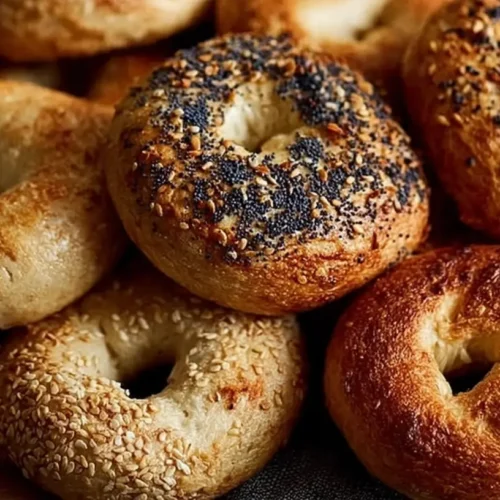
Classic Homemade Bagels
Equipment
- Large mixing bowl
- Stand mixer with dough hook (optional)
- Plastic wrap
- Baking sheet
- Parchment paper
- Large pot
- Slotted spoon or spider
- Wire rack
Ingredients
Bagel Dough
- 4 cups Bread Flour
- 1 ½ cups Warm Water
- 1 ½ teaspoons Instant Yeast
- 2 tablespoons Granulated Sugar for the dough
- 2 teaspoons Salt
Boiling Water & Topping
- ¼ cup Granulated Sugar for the boiling water
- 1-2 tablespoons Malt Barley Flour or Malt Syrup optional, for boiling water
- 1 Egg White optional, lightly beaten
- Toppings optional: Sesame seeds, poppy seeds, everything bagel seasoning, flaky sea salt
Instructions
Dough Preparation
- Activate the yeast by combining warm water, instant yeast, and 1 tablespoon of sugar in a large bowl; let it sit for 5-10 minutes until foamy.
- Add bread flour and salt to the yeast mixture, then mix on low speed with a dough hook for 8-10 minutes, or knead by hand for 12-15 minutes, until the dough is smooth and elastic.
- Form the dough into a ball, place it in a lightly oiled bowl, cover, and let it rise in a warm place for about 1 hour until nearly doubled in size.
Shaping & Cold Proof
- Gently punch down the dough, divide into 8 equal pieces (100-110g each), and shape each into a tight ball.
- Place the dough balls on a lightly floured baking sheet, cover loosely, and refrigerate overnight (12-24 hours) for a cold proof.
- The next day, remove dough balls from the fridge and let them sit at room temperature for 15-20 minutes while preparing the boiling water.
- Shape bagels using either the poke method (stretch a hole in the center) or the rope method (roll into a rope, join ends). Place shaped bagels on a parchment-lined baking sheet.
Boiling & Baking
- Preheat oven to 425°F (220°C) and bring a large pot of water to a rolling boil; add the remaining ¼ cup granulated sugar and optional malt to the boiling water.
- Gently drop 2-3 bagels into the boiling water at a time and boil for 60-90 seconds per side, flipping halfway through.
- Carefully remove boiled bagels, drain excess water, and place them back on the parchment-lined baking sheet; if desired, brush with egg white and sprinkle with toppings.
- Bake for 18-22 minutes until deeply golden brown and shiny, rotating the baking sheet halfway for even browning.
- Transfer the baked bagels to a wire rack to cool completely.