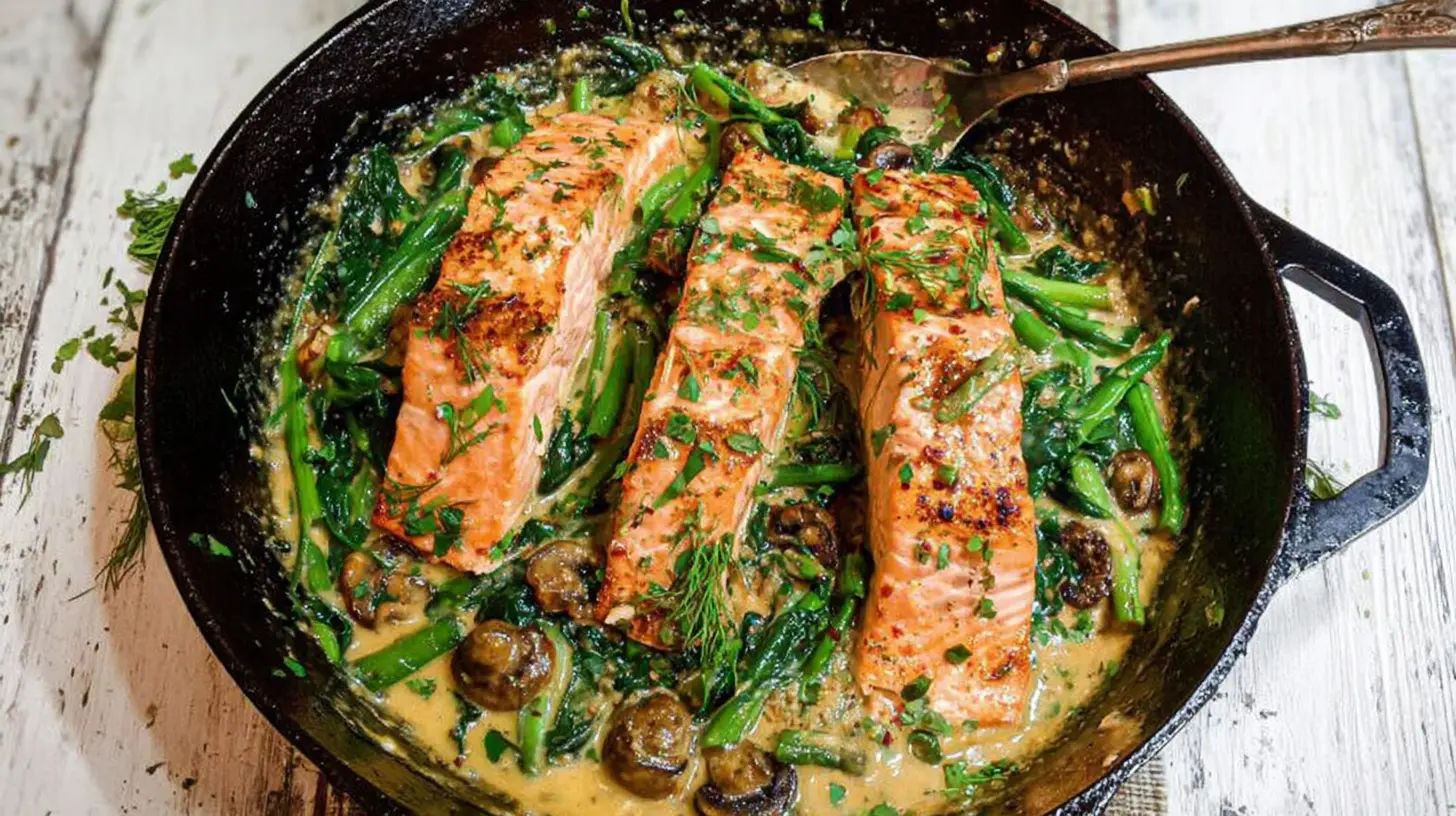
I remember the first time I made a skillet dinner with salmon; honestly, I was dubious. Could something so simple really deliver on flavor? The answer, unequivocally, was yes! This Low-Carb Salmon Skillet Dinner isn’t just another healthy meal; it’s a testament to how a few quality ingredients, cooked smartly in one pan, can create something truly impressive. If you’re looking for a healthy weeknight solution that doesn’t skimp on taste or presentation, you’ve landed in the right place.
Why You’ll Love This Dish
There are countless reasons why this low-carb salmon skillet is about to become a staple in your kitchen. First off, it’s incredibly quick. We’re talking about a complete, balanced meal on the table in under 30 minutes, which is a lifesaver on those hectic weeknights. Beyond speed, it’s a fantastic option for anyone embracing a low-carb, keto, or gluten-free lifestyle, proving that healthy eating can be utterly delicious and satisfying. Plus, a single-skillet meal means minimal cleanup – a huge win in my book! This dish is perfect for a cozy dinner for two, or easily scalable for a family, all while looking elegant enough to impress guests.
> “I used to dread cooking salmon, but this skillet recipe changed everything! It’s so easy, and the salmon comes out perfectly flaky every time. My family actually asks for it now!” — A Happy Home Cook
Preparing Your Low-Carb Salmon Skillet Dinner
Before we dive into the nitty-gritty, let’s get a quick overview of how this delightful meal comes together. You’ll start by seasoning your salmon fillets and searing them to get that beautiful, crispy skin. Then, in the same skillet, you’ll quickly sauté your chosen low-carb vegetables until tender-crisp. Finally, everything comes together in the pan, often with a simple sauce or a sprinkle of fresh herbs, creating a harmonious and flavorful dish. It’s truly a testament to the power of a good skillet and fresh ingredients.
What You’ll Need
To create this impressive and healthy Low-Carb Salmon Skillet Dinner, gather these items:
- Salmon Fillets: About 1.5-2 lbs, skin on or off, 4-6 oz portions. Wild-caught is often preferred for flavor and omega-3s.
- Olive Oil: Extra virgin, for searing and sautéing.
- Garlic: 3-4 cloves, minced, for aromatic depth.
- Low-Carb Vegetables: 1-2 cups total. Think asparagus, broccoli florets, bell peppers (any color), zucchini, or spinach.
- Lemon: One whole lemon, half for juice, half for slices to garnish.
- Fresh Herbs: A handful of fresh dill or parsley, chopped, for garnish and flavor.
- Salt and Black Pepper: To taste.
- Optional Spices: Paprika, garlic powder, onion powder, or a dash of red pepper flakes for extra kick.
- Butter (optional): A tablespoon or two at the end to add richness to the sauce.
Directions to Follow
Follow these straightforward steps to create your delicious low-carb salmon skillet:
- Prep the Salmon: Pat salmon fillets dry with paper towels. Season generously with salt, black pepper, and any optional spices you’re using. If leaving the skin on, ensure it’s very dry for crispiness.
- Sear the Salmon: Heat 1-2 tablespoons of olive oil in a large oven-safe skillet (cast iron works beautifully) over medium-high heat until shimmering. Carefully place salmon fillets, skin-side down (if applicable), in the hot skillet. Sear for 4-6 minutes, or until the skin is crispy and the salmon is cooked about halfway up the sides.
- Flip and Cook: Gently flip the salmon fillets. If your salmon is thick, you can transfer the skillet to a preheated oven at 375°F (190°C) for 5-8 minutes to finish cooking through, or continue cooking on the stovetop for another 3-5 minutes, depending on thickness, until it reaches your desired doneness (internal temperature of 145°F/63°C). Remove salmon from the skillet and set aside on a plate, tented with foil.
- Sauté Vegetables: In the same skillet, add a little more olive oil if needed. Add minced garlic and your chosen low-carb vegetables (starting with harder veggies like broccoli or bell peppers first, then softer ones like spinach). Sauté for 3-7 minutes, until vegetables are tender-crisp. Season with salt and pepper.
- Combine and Finish: Return the cooked salmon to the skillet with the vegetables. Squeeze fresh lemon juice over everything. If using butter, stir it in until melted and gently coats the vegetables and salmon.
- Garnish and Serve: Garnish generously with fresh dill or parsley and lemon slices. Serve immediately.
Best Ways to Enjoy It
This Low-Carb Salmon Skillet Dinner is truly a complete meal on its own, but there are a few ways you can elevate the experience. For a pop of color and a touch of freshness, a sprinkle of toasted slivered almonds or pine nuts over the top adds a lovely crunch. If you’re not strictly limiting dairy, a dollop of crème fraîche or plain Greek yogurt swirled with a little more dill can be a delightful addition. For those who enjoy a bit of heat, a drizzle of chili oil or a few red pepper flakes can kick things up a notch.
Keeping Leftovers Fresh
Storing your Low-Carb Salmon Skillet Dinner is straightforward. Once cooled, transfer any leftovers to an airtight container and refrigerate promptly. It will keep safely in the refrigerator for up to 2-3 days.
When reheating, I recommend gently warming it in a skillet over low heat or in the microwave on a low setting to avoid overcooking the salmon, which can make it dry. Add a splash of water, broth, or a squeeze of lemon juice to help revive it and maintain moisture. Freezing cooked salmon can alter its texture, making it a bit drier or flakier, so it’s generally best enjoyed fresh or within a couple of days from the fridge.
Helpful Cooking Tips
Achieving perfectly cooked salmon can sometimes feel like a culinary challenge, but with a few pointers, you’ll master it in no time.
- Don’t Overcrowd the Pan: Cook the salmon in batches if necessary to ensure it sears properly and develops a nice crust. Overcrowding can steam the fish instead of searing it.
- The Skin Side Down First Rule: If your salmon has skin, always start by searing it skin-side down. This allows the skin to get wonderfully crispy and acts as a shield, protecting the delicate flesh from overcooking.
- Know Your Salmon’s Doneness: Salmon is cooked when it flakes easily with a fork. It’s best to err on the side of slightly undercooked, as it will continue to cook a bit with residual heat after it’s removed from the pan.
- Pat Dry for Crispiness: Whether cooking skin-on or skin-off salmon, thoroughly patting the fillets dry with paper towels before seasoning is crucial for a good sear. Moisture creates steam, preventing that desirable crust.
- Ingredient Prep is Key: Have all your vegetables chopped and ready to go before you start cooking. This “mise en place” makes the skillet process smooth and prevents anything from burning while you’re busy chopping.
Creative Twists
While this recipe is fantastic as written, there are endless ways to customize your Low-Carb Salmon Skillet Dinner to suit your palate or what you have on hand.
- Spice it Up: Explore different spice blends! A touch of Cajun seasoning, a sprinkle of smoked paprika, or even a dry rub with cumin and coriander can completely change the flavor profile.
- Herb Variations: Instead of dill or parsley, try fresh thyme, oregano, or a mix of Italian herbs.
- Different Veggies: Don’t limit yourself to the suggestions! Consider green beans, brussels sprouts (halved), or even quickly sautéed mushrooms for variety. For a touch of color, add a handful of cherry tomatoes for the last few minutes of cooking.
- Creamy Finish: For a richer dish, once the vegetables are tender, stir in a quarter cup of heavy cream or full-fat coconut milk (for dairy-free) along with the lemon juice. This creates a beautiful, luscious sauce.
- Global Flavors: Want an Asian twist? Add a dash of soy sauce (or tamari for gluten-free) and a sprinkle of sesame seeds. For a Mediterranean vibe, include some Kalamata olives and capers.
Common Questions
How do I know when my salmon is perfectly cooked without overdoing it?
The best way to tell is by checking if the salmon flakes easily with a fork. You can also use an instant-read thermometer; salmon is cooked through when it reaches an internal temperature of 145°F (63°C) at its thickest part. Remember, it will continue to cook slightly even after removed from heat.
Can I make this with frozen salmon?
Yes, absolutely! Just make sure your salmon fillets are fully thawed before cooking. Pat them very dry to remove any excess moisture, which is especially important with thawed fish to ensure a good sear. The cooking time might be slightly adjusted based on the initial temperature of the fish.
What if I don’t have an oven-safe skillet?
No problem! You can sear the salmon on the stovetop as directed. If your fillets are thicker and need more cooking time, you can transfer them to a baking sheet to finish cooking in the oven, then return them to the stovetop skillet with the veggies. Alternatively, you can fully cook the salmon on the stovetop, flipping it regularly, then remove it and cook the vegetables before combining.
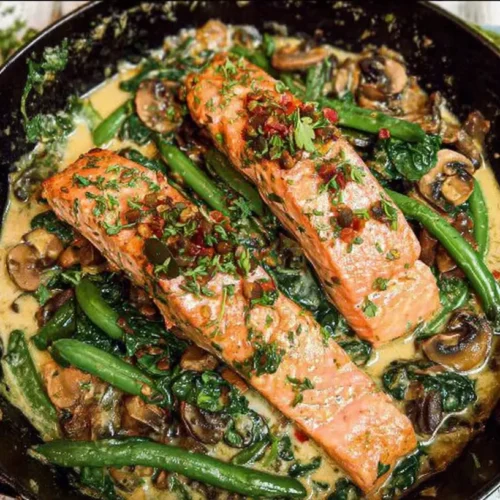
Vibrant Lemon-Garlic Salmon Skillet with Asparagus and Bell Peppers
Equipment
- Large skillet
Ingredients
Main Ingredients
- 2 Salmon fillets (about 4-6 ounces each)
- 1 tbsp Olive oil
- 1 tsp Minced garlic
- ½ Lemon (for zest and juice)
- ½ tsp Salt
- ¼ tsp Black pepper
- 1 cup Asparagus spears tough ends trimmed
- ½ Red bell pepper thinly sliced
- 1 tbsp Fresh parsley (for garnish, optional)
Instructions
Cooking Steps
- Pat salmon fillets dry and season generously with salt and black pepper.
- Heat a large skillet over medium-high heat with olive oil.
- Sear salmon fillets, skin-side down if applicable, for 3-4 minutes until crispy.
- Flip salmon, add asparagus and sliced red bell pepper to the skillet around the salmon.
- Continue cooking for 3-5 minutes until salmon is cooked through and vegetables are tender-crisp.
- Remove from heat and stir in minced garlic, lemon zest, and fresh lemon juice over the salmon and vegetables.
- Serve immediately, garnishing with fresh parsley if desired.