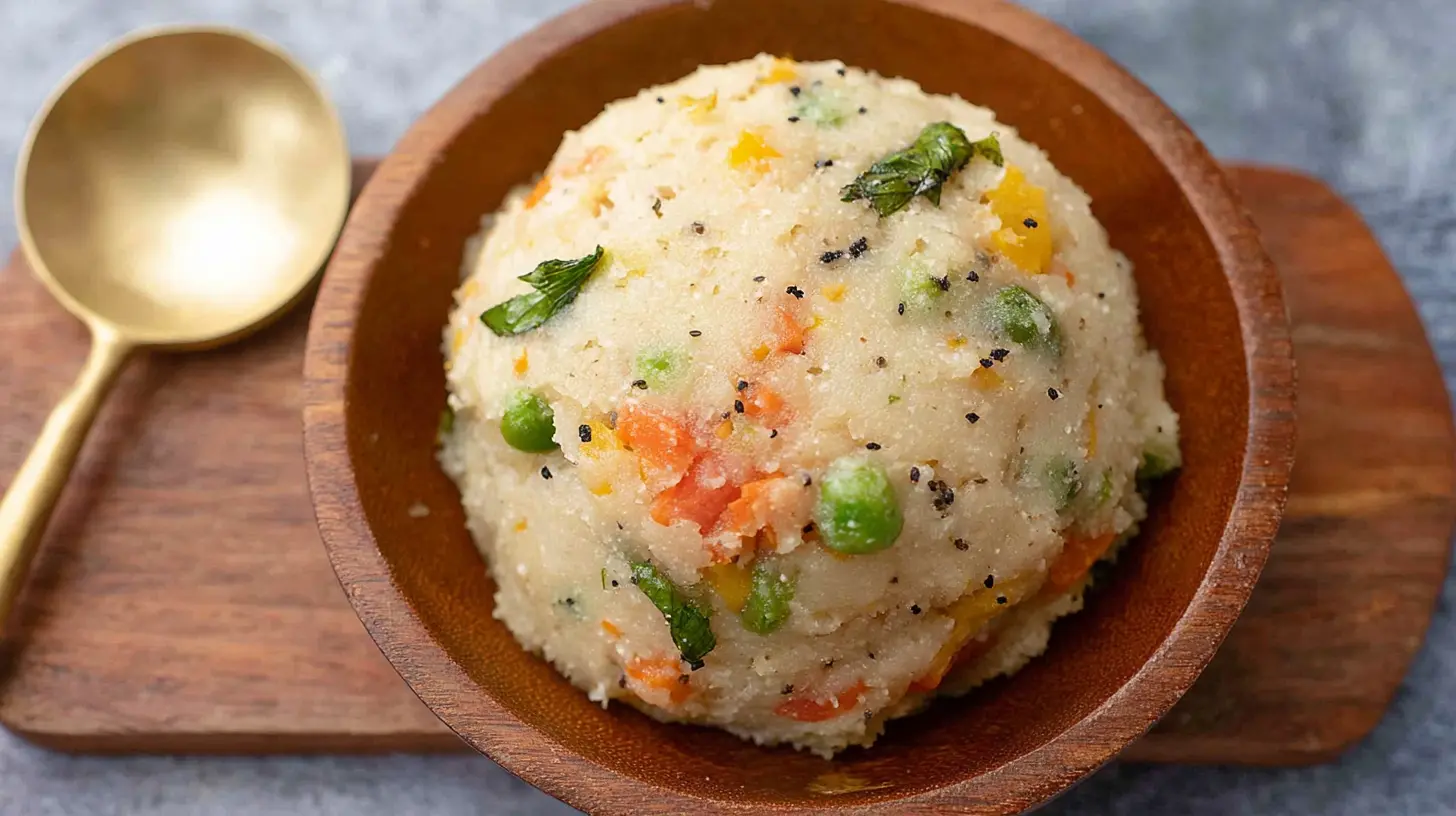
I remember the first time I truly appreciated a good Vegetable Upma. It wasn’t at a fancy restaurant, but in a small South Indian cafe where the aroma alone pulled you in. This wasn’t the bland, mushy upma I’d encountered before; it was vibrant, flavorful, and incredibly comforting. The owner, seeing my delight, shared a tiny secret: two often-overlooked spices that elevate the whole dish. And ever since, my homemade Vegetable Upma has been a revelation! Today, I’m excited to share that very trick with you, transforming this humble breakfast or snack into a truly memorable culinary delight.
Why You’ll Love This Dish
This isn’t just another upma recipe; it’s a guide to making the best Vegetable Upma you’ve ever had. What makes it so special, you ask? Well, for starters, it’s incredibly versatile – perfect for a quick breakfast, a light lunch, or even an evening snack. It’s packed with vegetables, making it a wholesome and fulfilling meal option. But the real magic lies in how two simple spices, often already in your pantry, awaken depth and aroma that will surprise and delight your taste buds. It’s also budget-friendly, comes together surprisingly quickly, and is a fantastic way to use up those leftover veggies in your fridge.
> “I never thought Upma could taste this good! The spices truly make a difference. My family loves it!” – A satisfied reader
The Cooking Process Explained
Making Vegetable Upma, especially with these flavor-boosting tips, is quite straightforward. You’ll start by lightly toasting the semolina, which is crucial for a fluffy texture and rich, nutty flavor. Then, a quick tempered spice blend (the tadka) is prepared, infusing oil with incredible aroma. Next come your chosen vegetables, cooked until tender-crisp. Finally, the toasted semolina is stirred in with hot water, allowing it to absorb and expand into that characteristic fluffy consistency. A short resting period finishes the dish, allowing all the flavors to meld beautifully.
What You’ll Need
To embark on this flavorful journey, gather these items:
- Rava (Semolina): 1 cup (medium grain works best)
- Water: 2.5 – 3 cups (depending on the type of rava and desired consistency)
- Oil or Ghee: 2 tablespoons
- Mustard Seeds: 1 teaspoon
- Cumin Seeds: 1 teaspoon (this is one of the two secret spices!)
- Chana Dal (Split Chickpeas): 1 teaspoon (optional, for crunch)
- Urad Dal (Split Black Lentils): 1 teaspoon (optional, for crunch)
- Asafoetida (Hing): A pinch
- Curry Leaves: 8-10 fresh leaves
- Green Chilies: 1-2, slit lengthwise (adjust to your spice preference)
- Onion: 1 medium, finely chopped
- Ginger: 1 inch piece, grated or finely minced
- Mixed Vegetables: 1 cup, finely chopped (carrots, peas, beans, bell peppers are excellent choices)
- Turmeric Powder: 1/4 teaspoon (for color and health benefits)
- Coriander Powder: 1/2 teaspoon (this is the second secret spice!)
- Salt: To taste
- Lemon Juice: 1-2 teaspoons, freshly squeezed
- Fresh Coriander Leaves: For garnish, chopped
Ingredient Note: While chana dal and urad dal add a lovely textural contrast, don’t fret if you don’t have them. The main flavor enhancers here are the cumin seeds and coriander powder.
Directions to Follow
Follow these steps for a perfectly flavored Vegetable Upma:
- Toast the Rava: Heat a dry pan over medium-low heat. Add the semolina and dry roast, stirring continuously, until it turns fragrant and slightly golden (about 5-7 minutes). Be careful not to burn it. Transfer the toasted rava to a plate and set aside.
- Prepare the Tadka: In the same pan, heat the oil or ghee over medium heat. Once hot, add the mustard seeds. When they splutter, add the cumin seeds, chana dal, and urad dal (if using). Sauté for about 30 seconds until the dals turn light golden.
- Add Aromatics: Add the asafoetida, curry leaves, green chilies, chopped onion, and grated ginger. Sauté until the onion turns translucent, about 3-5 minutes.
- Cook Vegetables: Add the finely chopped mixed vegetables, turmeric powder, and salt. Cook, stirring occasionally, until the vegetables are tender-crisp (about 5-7 minutes).
- Introduce the Flavor Secret: Stir in the coriander powder. Sauté for another minute, allowing the aroma to bloom.
- Add Water: Pour in the hot water and bring it to a rolling boil. Check for salt and adjust if needed.
- Combine Rava: Gradually add the toasted semolina to the boiling water, stirring continuously with one hand to prevent lumps. Reduce the heat to low.
- Cook and Rest: Cover the pan and let the upma cook for 5-7 minutes, or until all the water is absorbed and the rava is cooked through and fluffy. Turn off the heat and let it rest, covered, for another 5 minutes.
- Finish and Serve: Gently fluff the upma with a fork. Stir in the fresh lemon juice and garnish with chopped fresh coriander leaves.
Best Ways to Enjoy It
Vegetable Upma is incredibly delicious on its own, especially when fresh and hot. For a complete South Indian breakfast experience, serve it with a side of coconut chutney or a dollop of plain yogurt. A sprinkle of podi (a spicy lentil powder mix) and a tiny drizzle of ghee can elevate it further. It also pairs wonderfully with a cup of filter coffee or masala chai. For an even more vibrant presentation, you can garnish with a few roasted cashews or peanuts for extra crunch.
Storage and Reheating Tips
Leftover Vegetable Upma can be stored in an airtight container in the refrigerator for up to 2-3 days. To reheat, you can microwave it for a couple of minutes, adding a tablespoon or two of water to help rehydrate and prevent it from drying out. Alternatively, reheat it gently in a pan on the stovetop with a little water, stirring until warmed through. While it’s best fresh, reheating carefully will still yield a tasty meal. Freezing is not recommended as it can alter the texture of the semolina, making it mushy or grainy upon thawing.
Helpful Cooking Tips
- Don’t skip toasting the rava: This step is paramount for a non-sticky, fluffy upma. Lightly golden is key; burnt rava will make the entire dish bitter.
- Hot water is essential: Using hot or boiling water when adding to the semolina helps prevent lumps and ensures even cooking.
- Stir continuously when adding rava: This is another crucial step to avoid clumping. Pour slowly with one hand, stir with the other.
- Ratio matters: The water-to-rava ratio can vary slightly depending on your brand of semolina. Start with 2.5 cups of water and add more if needed.
- Chop veggies uniformly: Smaller, uniform pieces cook faster and integrate better into the upma.
- Adjust spice: Feel free to increase or decrease green chilies based on your heat preference.
- Fresh curry leaves: If possible, always use fresh curry leaves for the authentic aroma.
Creative Twists
- Nutty Crunch: Add a handful of roasted cashews or peanuts along with the dals for extra texture and richness.
- Different Veggies: Don’t limit yourself! Try adding finely chopped broccoli, cauliflower florets, or even spinach for diverse nutrients and flavors.
- Protein Boost: Stir in some sprouted moong dal or a handful of roasted paneer cubes towards the end for added protein.
- Tomato Tang: A tablespoon of finely chopped ripe tomato or a splash of tomato puree can add a nice tang and color. Add it along with the other vegetables.
- Sweet Touch (Savory Upma): Some people enjoy a tiny pinch of sugar added along with the salt to balance the flavors.
Common Questions
Why is my Upma sticky or lumpy?
A: This usually happens if the semolina wasn’t toasted enough, or if cold water was added, or if the semolina wasn’t added gradually while stirring. Ensure uniform toasting, use hot water, and add rava slowly while continuously stirring.Can I use instant rava for this recipe?
A: Yes, you can use instant rava, but the toasting time might be slightly shorter, and it might absorb water a bit differently. Keep an eye on it and adjust water as needed. The principles of adding the secret spices still apply!What if I don’t have fresh curry leaves?
A: While fresh curry leaves provide the best aroma, you can omit them. However, they are a signature flavor for Upma, so it’s a good idea to try and source them if possible.Can I make Upma without onions or garlic?
A: Absolutely! Many traditional South Indian recipes are made without onion or garlic, especially for certain dietary preferences. You can omit the onion and still get fantastic flavor from the other spices and ginger.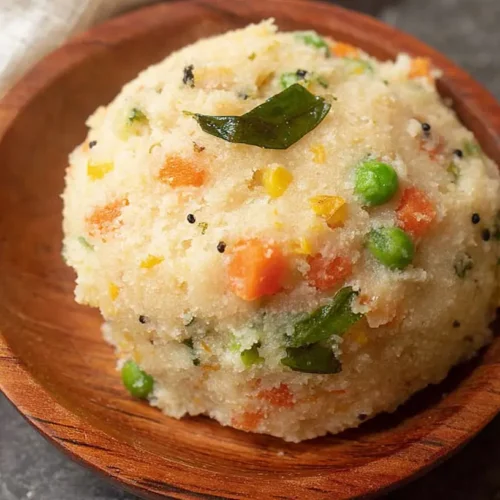
Delightful 8-Ingredient Vegetable Upma
Equipment
- Heavy-bottomed pan
- Lid
Ingredients
Main Ingredients
- 1 cup Rava (Semolina) fine or medium grain
- 1 Onion small, finely chopped
- 1 Carrot diced small
- 1/4 cup Peas fresh or frozen
- 1 Green Chili finely chopped (adjust to taste)
- 1 tsp Ginger grated or finely minced
- 1/2 tsp Mustard Seeds
- 5-6 Curry Leaves fresh
- 1-2 tbsp Oil neutral cooking oil
- 2 cups Water
- Salt to taste
- Fresh Coriander (Cilantro) for garnish
Instructions
Preparation
- Heat a dry, heavy-bottomed pan and dry roast the rava for 5-7 minutes until lightly golden and fragrant. Transfer to a plate and set aside.
Cooking
- In the same pan, heat oil over medium heat, add mustard seeds, curry leaves, green chili, and ginger; sauté for 30 seconds.
- Add chopped onion and cook until translucent, then add diced carrots and peas and sauté for 3-5 minutes until softened.
- Pour in 2 cups of water and salt to taste, and bring the water to a rolling boil.
- Reduce heat to low, gradually add the roasted rava in a slow, steady stream while stirring continuously to prevent lumps.
- Cover and simmer for 5-7 minutes until the water is absorbed and the rava is cooked through and fluffy.
- Turn off the heat, let it rest for 2-3 minutes, then fluff with a fork and garnish with fresh coriander before serving.